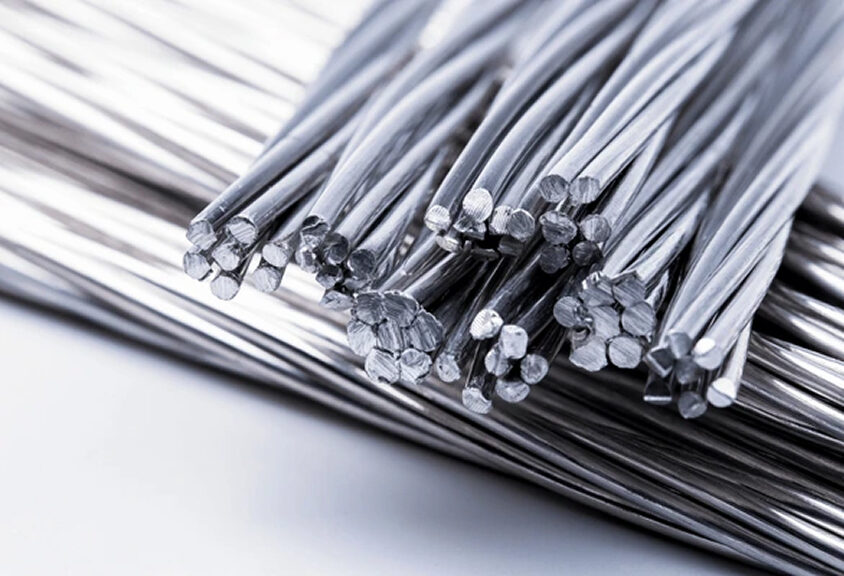
Aluminium Wire Rods

Aluminium wire rods are partially finished metal products employed in several industrial sectors, mainly for electrical and mechanical uses. They are produced using continuous casting and rolling or extrusion processes and act as raw materials for electrical cable, conductor, and other aluminium components' manufacturing.

Key Features & Properties

Lightweight: Aluminium is much lighter compared to copper and thus well-suited for uses that involve reducing weight.
High Conductivity: Even though not as conductive as copper, aluminium has great electrical conductivity and is thus extensively applied in power transmission lines.
Corrosion Resistance: Aluminium also develops a protective oxide layer naturally that shields it from corrosion, thereby increasing its lifespan in diverse environments.
Malleability & Ductility: Aluminium wire rods can be drawn into wires or other forms without rupture easily.
Eco-Friendly & Recyclable: Aluminium can be 100% recycled without losing its properties, hence a green choice for industries.

Manufacturing Process

Melting & Alloying: Pure or alloyed Aluminium is melted in a furnace.
Casting: The molten Aluminium is cast into wire rods through a continuous casting machine.
Rolling & Cooling: The rods are hot-rolled and cooled for further processing.
Coiling & Packaging: The processed wire rods are coiled and packaged for distribution.

Uses of Aluminium Wire Rods

Electrical Industry: Employed in overhead power transmission cables and conductors.
Automotive & Aerospace: Light weight, making them suitable for producing components.
Construction & Infrastructure: Used in fencing, building wiring, and support frames.
Industrial Machinery: Employed in mechanical parts and welding electrodes.

Prayosha Tredlink LLP

Customer Feedback

Get In Touch